


Guides & Market Intelligence
Prediction market strategies, platform deep-dives, and data-driven analysis to sharpen your edge.
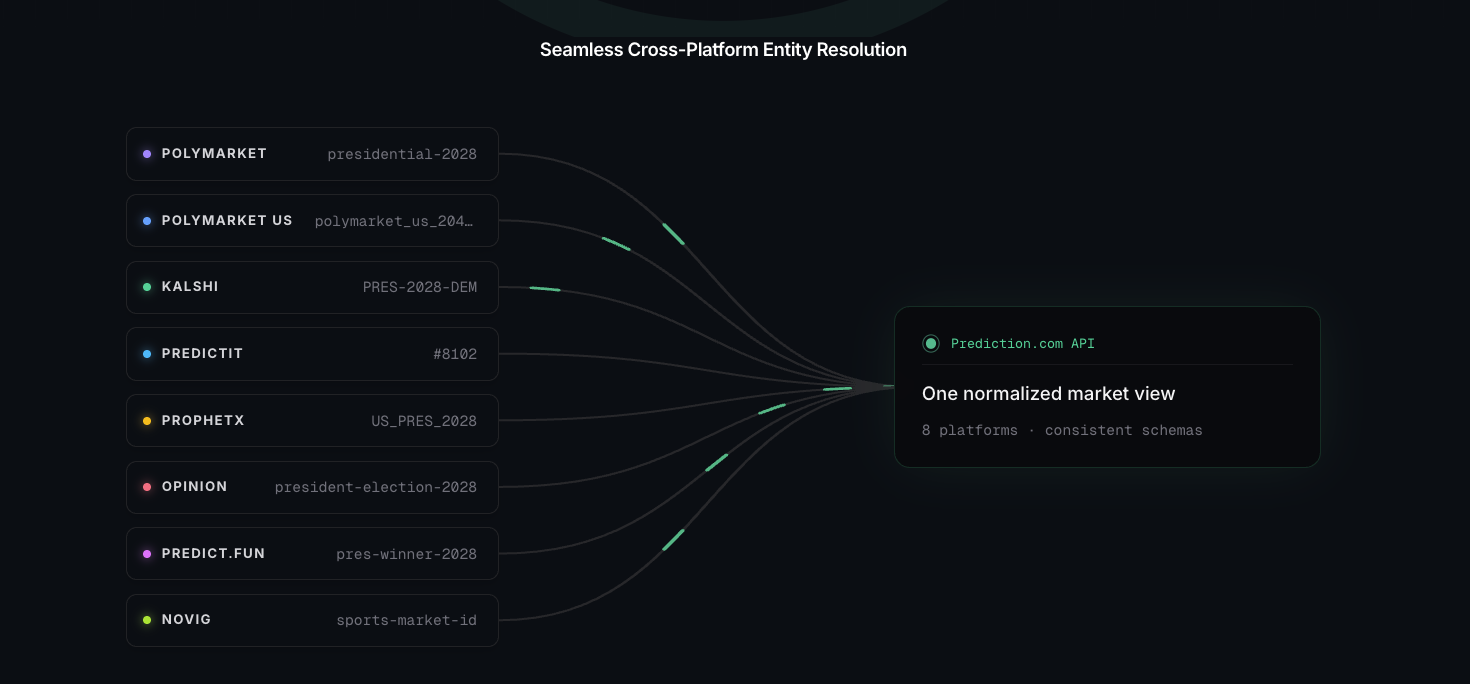

Best Crypto Prediction Markets in 2026
Where to trade bitcoin and crypto event contracts in 2026: Polymarket, Kalshi, Limitless, and Myriad compared on regulation, liquidity, and product depth.

Prediction Market Indices: How Event Contract Indexes Work
What a prediction market index is, how Kalshi's political power index works, where equity index perps fit in, and whether a prediction market ETF exists yet.

What Are Perpetual Futures? Perps Explained for US Traders
Perpetual futures explained: how perps work, what funding rates are, and how Kalshi brought regulated crypto perps to US traders in 2026.
Polymarket & Kalshi Historical Data: Free Sources & APIs
Every source for Polymarket and Kalshi historical data — free API endpoints, candlesticks, trade history, on-chain data, and unified options.
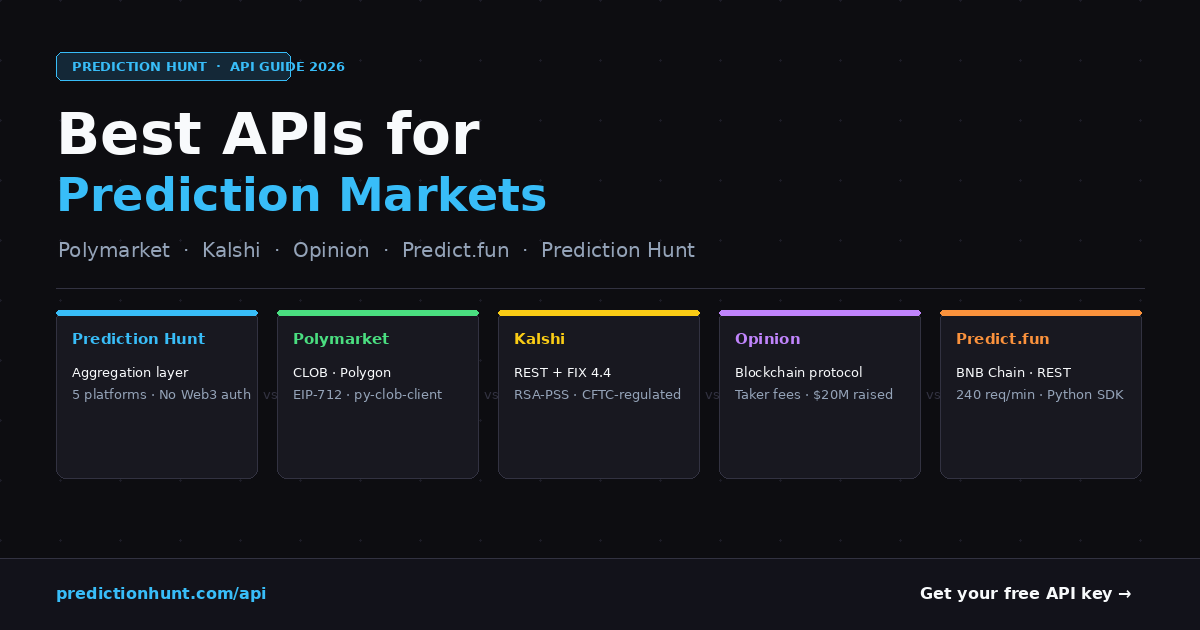
How to Build a Polymarket Trading Bot in Python (2026)
Build a Polymarket trading bot in Python: wallet setup, py-clob-client, market data, order placement, and a working strategy skeleton.
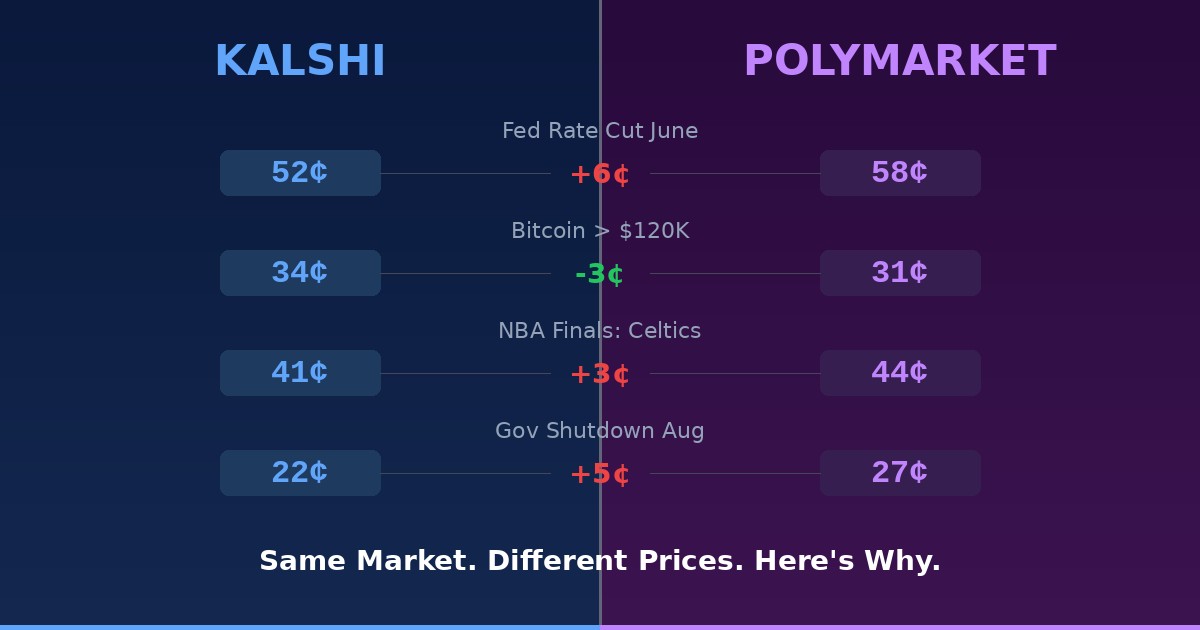
How to Find Kalshi vs Polymarket Arbitrage (2026)
How arbitrage works between Kalshi and Polymarket: the math, negative-risk arbitrage, fees, real risks, and how to scan for opportunities automatically.
Kalshi API: The Complete Getting Started Guide (2026)
How to use the Kalshi API — market data endpoints, RSA API key authentication, the Python SDK, WebSockets, and the demo environment. With code examples.
Polymarket API Guide: Gamma, CLOB & Data API (2026)
Everything you need to use the Polymarket API — Gamma, CLOB, and Data API endpoints, authentication, rate limits, WebSockets, and Python examples.
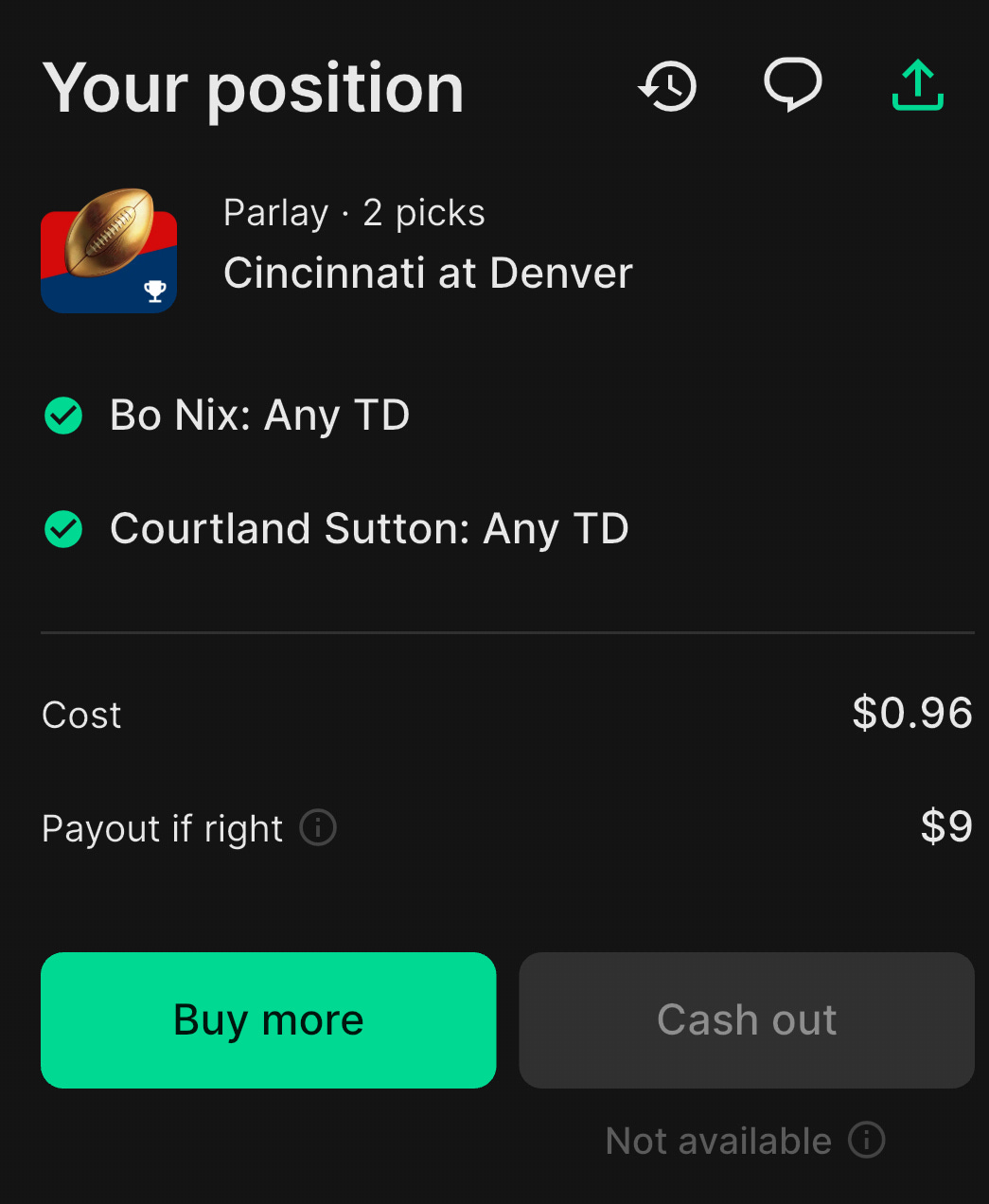
How to Short on Prediction Markets: The Mechanics Explained
Prediction markets have no 'short' button — you buy NO or sell YES shares you own. Exactly how it works on Polymarket and Kalshi, with examples.
Kalshi Fees 2026: Trading, Deposit & Withdrawal Costs
Kalshi's peak taker fee is 1.75%, but most trades cost far less. The full P×(1-P) formula, category-by-category fees, and maker rebates.

Polymarket vs Kalshi 2026: Side-by-Side Comparison
Fees, liquidity, market selection, withdrawal speed, US legality, and mobile apps — the unsentimental head-to-head between the two biggest platforms.
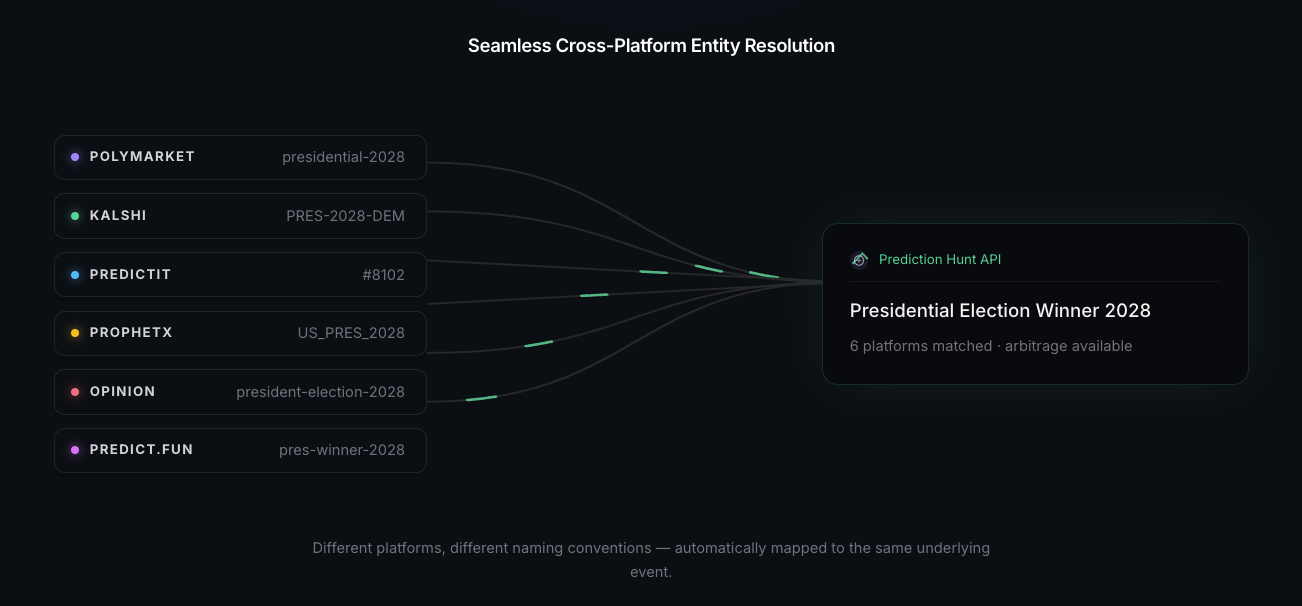
Prediction Market Glossary: 40 Essential Terms
From 'implied probability' to 'thick book' — the complete A-to-Z reference for prediction market terminology, with concrete examples on Polymarket and Kalshi.
Case Study: Maximizing Alpha in Prediction Markets
How Elastics uses the Prediction HuntPrediction.com Market Matching API as a smart order router to automate trading across Kalshi, Polymarket, PredictIt and more.
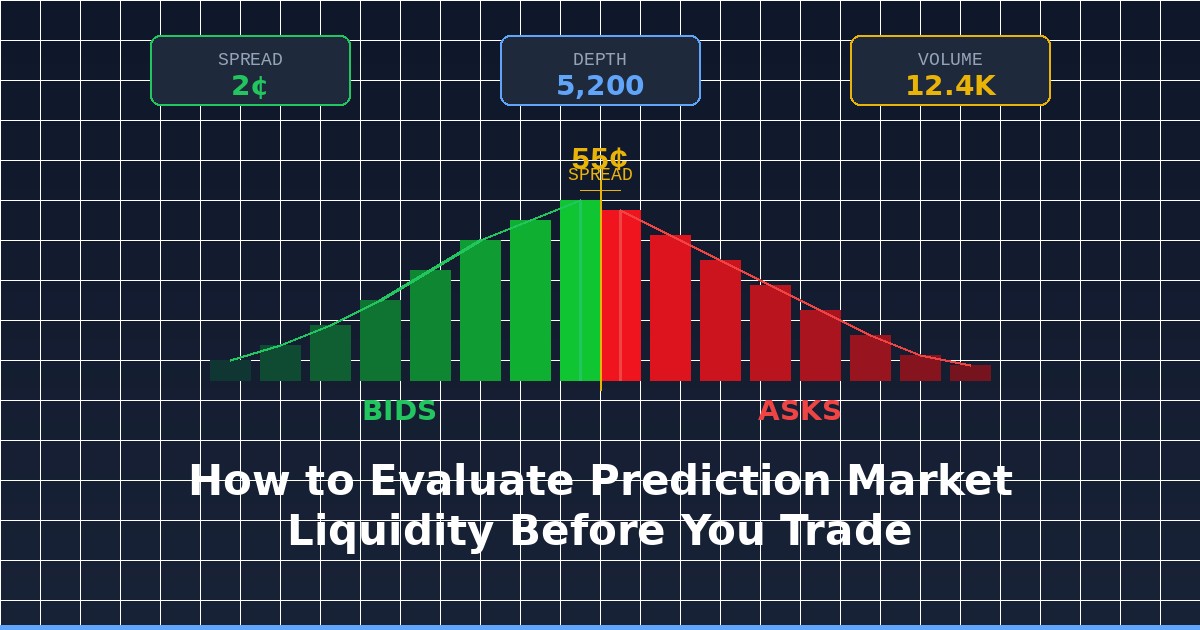
How to Evaluate Prediction Market Liquidity Before You Trade
A practical guide to checking depth, spreads, and fill quality before you commit capital. Stop getting worse prices than you expected.
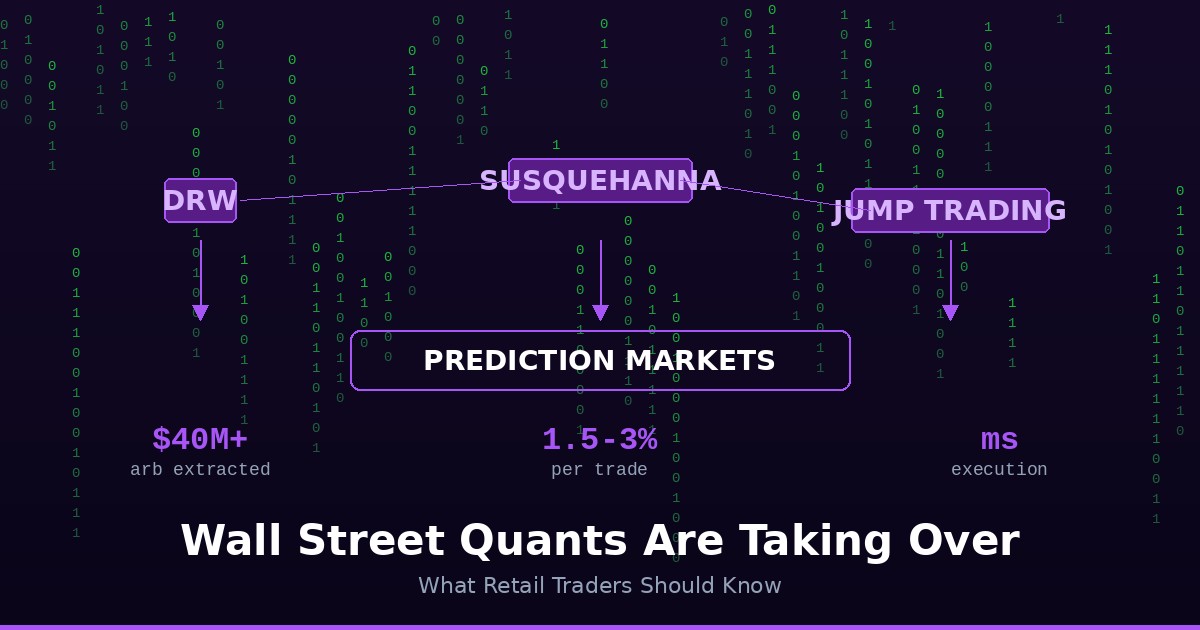
Wall Street Quants Are Taking Over Prediction Markets
DRW, Susquehanna, and Jump Trading are building prediction market desks. How institutional money changes the game — and where retail still has an edge.
Why Kalshi and Polymarket Price the Same Market Differently
The same question can trade at 52¢ on one platform and 58¢ on another. It's not a glitch — it's liquidity, demographics, fees, and market structure.
Best API for Prediction Markets in 2026 (Kalshi, Polymarket)
Compare the best prediction market API in 2026: Polymarket API, Kalshi API, PredictIt, Predict.fun and Prediction HuntPrediction.com's unified cross-platform data API.
How to Build a Prediction Market Trading Bot (API Guide)
The APIs, SDKs, strategies, and hard-earned lessons behind building automated prediction market trading systems — from first API call to working bot.
Position Sizing in Prediction Markets: The Kelly Criterion
The Kelly Criterion, fractional Kelly, and correlation risk — why most traders blow up not because they're wrong, but because they bet too much.
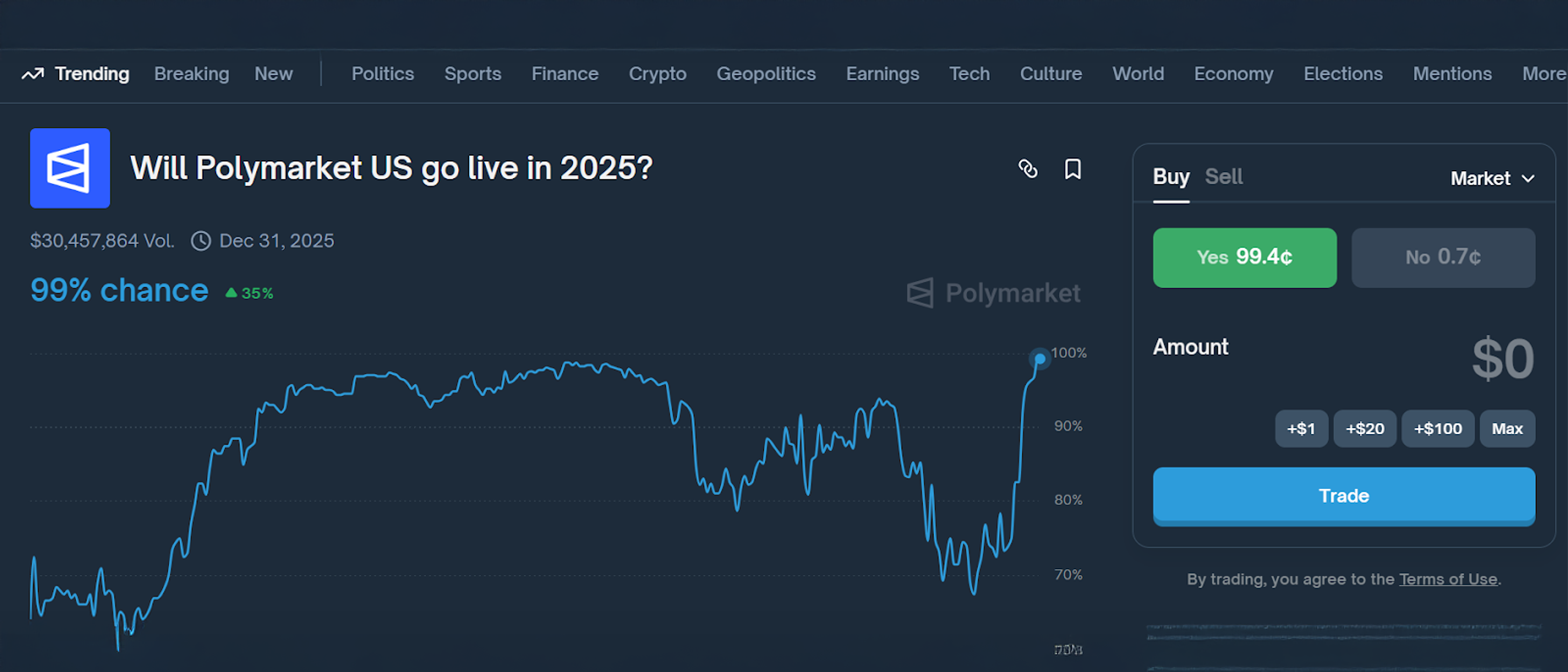
How to Use Polymarket: Beginner's Guide for US Traders
Step-by-step Polymarket tutorial for US traders: create an account, deposit funds, place your first trade, and avoid the 5 costliest beginner mistakes.

Is Insider Trading on Prediction Markets Illegal?
A Kalshi trader was fined $20,000 for insider trading in 2026. Israeli authorities arrested bettors over Iran bets. Where the legal line actually is.
Kalshi Parlays: How Combos Work vs Sportsbook Parlays
Kalshi lets you combine multiple event contracts into a single parlay. Here's the math behind combos, when they give you better prices, and when they're a trap.
Do You Owe Taxes on Polymarket Winnings? (2026)
Yes — prediction market profits are taxable income. What Polymarket and Kalshi traders owe, what counts as a deductible loss, and how to file.

Prediction Markets vs Sportsbooks: Why Bettors Are Switching
Traditional sportsbooks charge about 4.5% vig on every bet. Kalshi charges 1-2%. Here is why sharp sports bettors are switching to prediction markets in 2026.

What is a Walkover in Tennis?
Walkovers explained: definition, differences vs. retirement/default, implications and betting rules.

Alt Receiving Yards: What It Means and How to Use It
A practical guide to alternate receiving yards: how they work, risks, and strategies.

What Is Reverse Line Movement in Online Betting?
Reverse line movement (RLM) explained: why lines move against public betting, how to spot it early, and when to use it.
Polymarket vs Kalshi Fees: Which Platform Takes Less?
Polymarket now charges category-based fees up to 1.8%. Kalshi charges up to 1.75%. Opinion has a $0.25 minimum. Full 2026 fee breakdown with examples.

Is Kalshi Legit?
A deep dive into Kalshi's regulation, legal risks, and user experience.

How to Check for Arbitrage
Add outcomes and compare to $1; a quick checklist for real-world execution.
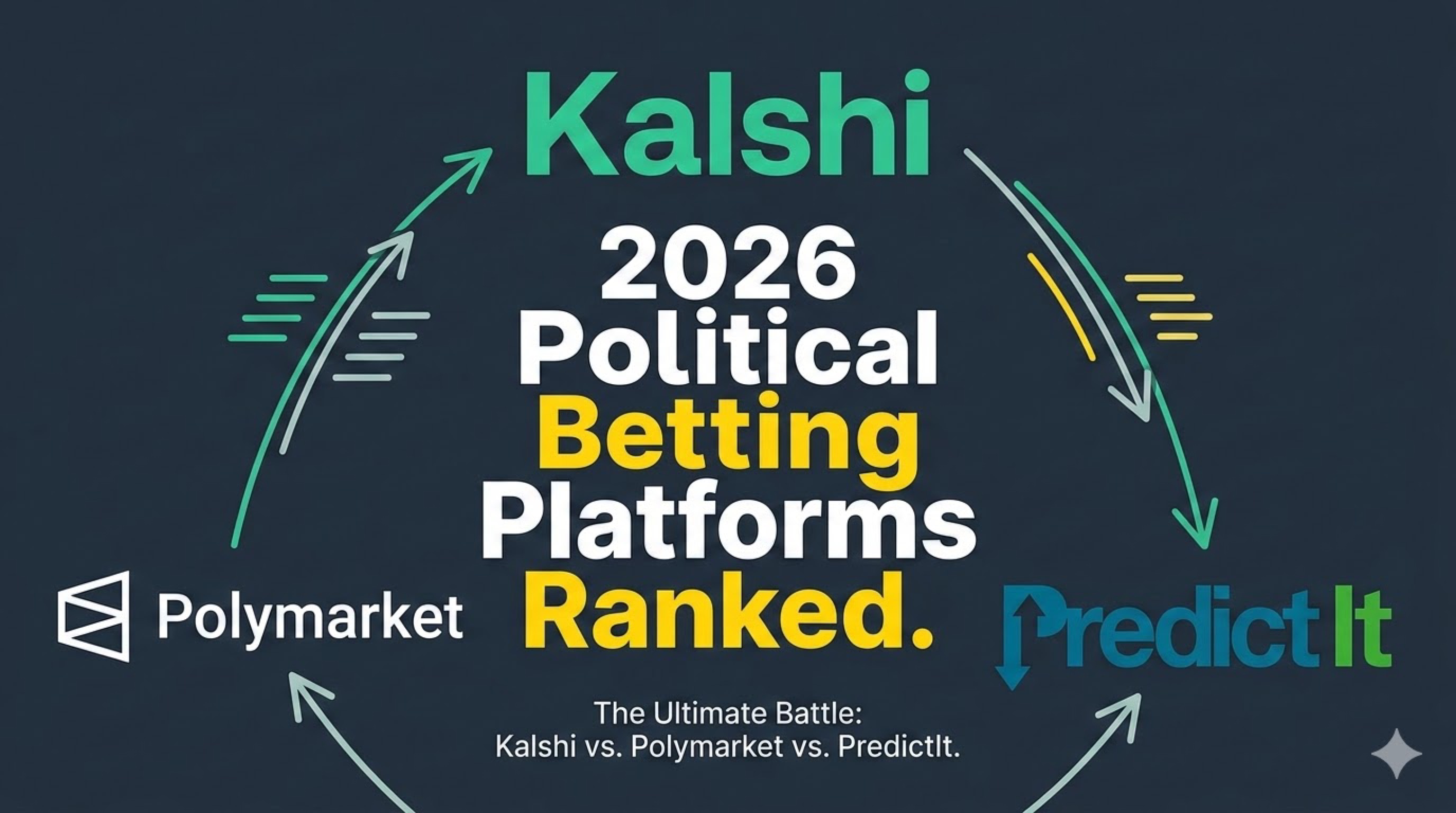
7 Best Political Betting Sites (2026): Kalshi vs Polymarket
We analyzed liquidity, fees, and legality for the 2026 midterms. See who wins the fee war between Kalshi, Polymarket, and PredictIt. Updated March 2026.
How to Read Prediction Market Prices Without Getting Misled
How to interpret market prices correctly: use midpoints, account for fees, and watch for uneven information.
The Mirage of "Free Money" in Cross-Exchange Arbitrage
Why "free" arbitrage often isn't: contract mismatches, invisible costs, and execution risk.
Liquidity Lies: How Surface Prices Can Mislead Traders
Same price ≠ same trade: depth, spread, stability, and compounding slippage behind the quote.
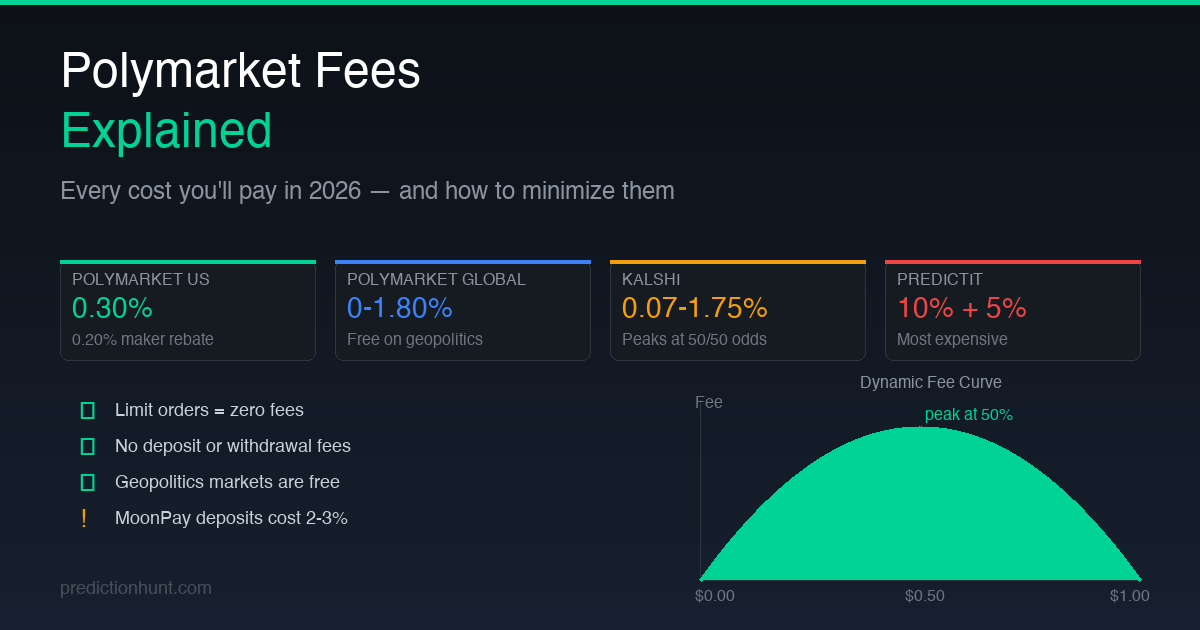
Polymarket Fees 2026: Calculator & Complete Cost Guide
Polymarket promised 1.8% max fees, but the formula charges up to 7.2% on low-probability crypto markets — the math, V1 vs V3, and how to pay less.