




Best Crypto Prediction Markets in 2026
Where to trade bitcoin and crypto event contracts in 2026: Polymarket, Kalshi, Limitless, and Myriad compared on regulation, liquidity, and product depth.
Crypto was one of the first use cases for prediction markets and it remains one of the biggest: bitcoin price markets alone have attracted more than $80 million in open bets on where BTC lands in 2026 and beyond. But the venue landscape has changed fast, with regulated US perps arriving, Polymarket US going live, and a wave of on-chain challengers. Here is where crypto prediction market trading actually happens in 2026, and how to pick the right venue.
What Is a Crypto Prediction Market?
A crypto prediction market is an exchange where you trade contracts on crypto outcomes rather than the coins themselves. The classic structure is a binary event contract: "Will bitcoin be above $100,000 on December 31?" trades between $0 and $1, and settles at $1 if the answer is yes. A price of 47 cents means the market collectively assigns a 47% probability.
That structure has two properties spot and futures trading lack. Your downside is strictly capped at what you paid, and the price is directly readable as a probability. It is the cleanest way to bet on a specific threshold or date without touching leverage.
The Major Venues in 2026
Polymarket: Deepest Crypto Event Liquidity
Polymarket is the largest prediction market globally, and crypto is core to it: crypto and politics together account for over half of the platform's volume (sports, by contrast, dominates Kalshi). Through May 2026 Polymarket had settled roughly $9.4 billion in cumulative notional across about 14,200 markets, trading in USDC.
For bitcoin specifically, Polymarket runs dense ladders of price targets and dates: monthly closes, year-end thresholds from $55,000 up to $250,000, and "what price in between" range markets. If a crypto scenario is worth arguing about, Polymarket almost certainly has a market on it.
Kalshi: The Regulated US Venue, Now With Perps
Kalshi is a CFTC-regulated exchange, which matters if you want US legal clarity, standard KYC, and dollar deposits (see is Kalshi legit for the full regulatory picture). Its crypto offering runs bitcoin and other price-threshold event contracts, and since June 2026 it also offers perpetual futures, the first regulated perps in America, which crossed $1 billion in volume in their first week.
That makes Kalshi the only venue where you can trade the probability (event contract) and the price (perp) on the same underlying asset in one regulated account.
Polymarket US
Polymarket's regulated American arm gives US traders access to a version of the global product with a low flat fee structure. Liquidity is still building relative to the global books, but for US customers it is the most direct route into Polymarket-style crypto markets. Our Polymarket vs Kalshi comparison covers the fee and access details.
Limitless, Myriad, and the On-Chain Field
A cluster of on-chain venues (Limitless, Myriad, Azuro, PolyBet) collectively ran under 4% of Polymarket's monthly volume as of May 2026, but two are worth knowing. Limitless specializes in short-duration crypto markets on Base, hourly and daily price contracts that behave almost like binary options. Myriad leans toward entertainment and pop culture but carries bitcoin markets that sometimes price meaningfully differently from the majors.
Reading the Market: What Crypto Odds Looked Like in Mid-2026
A snapshot of how these markets get used. In mid-2026, Kalshi traders put roughly even odds (about 47%) on bitcoin crossing six figures by year-end, while Polymarket assigned only around 11% to BTC reaching $150,000 in the same window. Stack the thresholds side by side and you get a full market-implied probability distribution for bitcoin's year-end price, something no analyst report can give you.
Those numbers move every hour, which is the point: prediction markets are a live sentiment instrument, not a static forecast.
Same Market, Different Prices: The Arbitrage Angle
Because the same bitcoin threshold trades on multiple venues, prices diverge. A year-end $100K market might trade at 47 cents on Kalshi and 44 cents on Polymarket at the same moment. Sometimes that gap is explained by fees or settlement details; sometimes it is free money for whoever closes it.
This is exactly what Prediction HuntPrediction.com is built for. Our arbitrage scanner watches matched markets across Kalshi, Polymarket, and the rest of the field in real time, and our guide to Kalshi vs Polymarket arbitrage walks through executing the trade. If you want to understand why the gaps exist at all, read why the same market trades at different prices.
Picking Your Venue: A Quick Framework
- You want US regulation and one account for everything: Kalshi. Event contracts plus perps, dollars in and out.
- You want the deepest crypto event liquidity and the widest menu: Polymarket.
- You are a US trader who wants Polymarket-style markets: Polymarket US.
- You trade short-timeframe price action: Limitless-style hourly markets, with the caveat of thinner books.
- You want the best price on any given trade: all of them. Line-shop across venues on our live odds pages before you click buy.
The Bottom Line
Crypto prediction markets grew up in 2026. Volume across Polymarket and Kalshi went from under $5 billion a month in late 2025 to roughly $24 billion by spring 2026, US traders got regulated access on two fronts, and perps landed onshore. The market-implied probabilities these venues produce are now some of the best crypto sentiment data anywhere, and the cross-venue price gaps are a real edge for traders who monitor them. Start with the venue that fits your jurisdiction, and let the odds do the talking.
Frequently Asked Questions
What is a crypto prediction market?
A crypto prediction market lets you trade yes or no contracts on crypto outcomes, most commonly price levels, such as whether bitcoin will close the year above $100,000. Contracts trade between $0 and $1 and settle at $1 if the event happens, so the price doubles as the market's probability estimate.
Which platform is best for trading crypto prediction markets?
Kalshi is the strongest choice for US traders who want a CFTC-regulated venue, and it now offers bitcoin perpetual futures alongside event contracts. Polymarket has the deepest crypto event liquidity globally, with crypto and politics making up over half its volume. Limitless and Myriad are smaller on-chain venues worth watching.
Can US traders use Polymarket for crypto markets?
Polymarket's global platform has historically been unavailable to US customers. Polymarket US operates as a regulated venue for American traders, while the global order books remain the deeper pool for crypto event contracts. Check the current access rules for your jurisdiction before funding an account.
Are crypto prediction market odds accurate?
They are the live consensus of traders with money at stake, which historically makes them well calibrated but not clairvoyant. Odds move constantly with the underlying price. The same market can also trade at different prices on different venues, which creates arbitrage opportunities for traders who watch both.
What is the difference between a crypto prediction market and a perp?
An event contract settles at $1 or $0 based on a yes or no question with a resolution date, and your maximum loss is what you paid. A perpetual future is a leveraged, non-expiring contract on the price itself, with funding payments and liquidation risk. Kalshi now offers both side by side.
Build with this data
Automate your strategies, create arb bots, or build your own dashboard. Free tier includes 1,000 requests/mo across all prediction market platforms.
Free Trading Tools
View allCompare fees across Kalshi, Polymarket & PredictIt.
Find fair probabilities with the overround removed.
See if a trade has positive EV before you enter.
Convert American, decimal & implied probability.
Combined odds and payouts for multi-leg bets.
Your real take-home after fees and taxes.
Related Posts
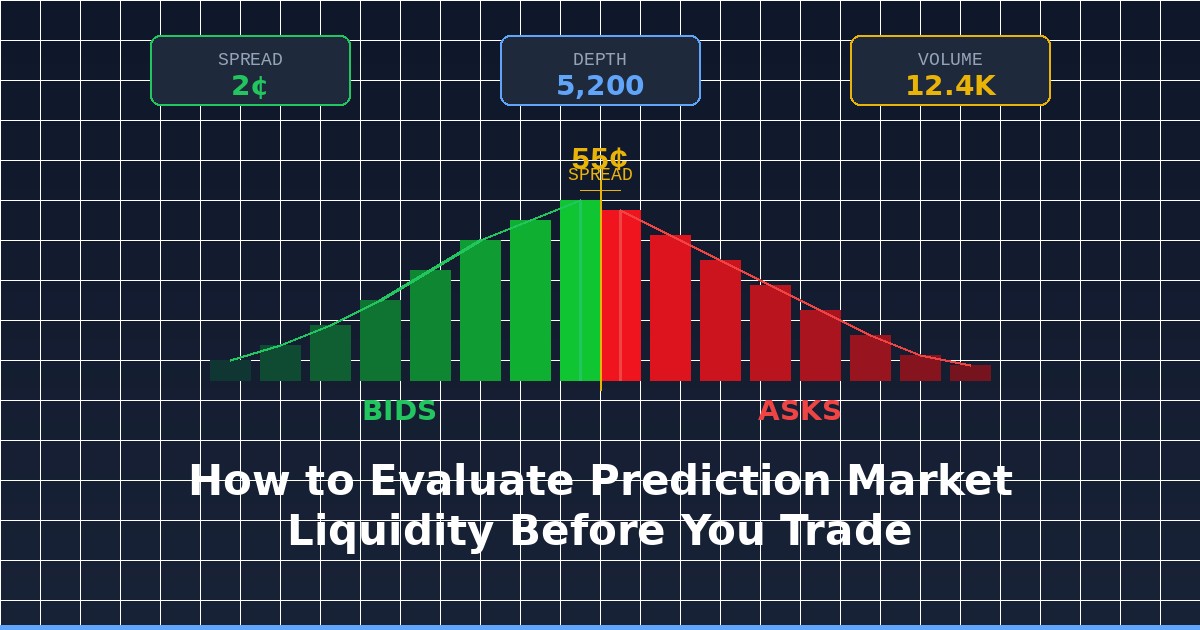
How to Evaluate Prediction Market Liquidity Before You Trade
A practical guide to checking depth, spreads, and fill quality before you commit capital. Stop getting worse prices than you expected.
9 min readRead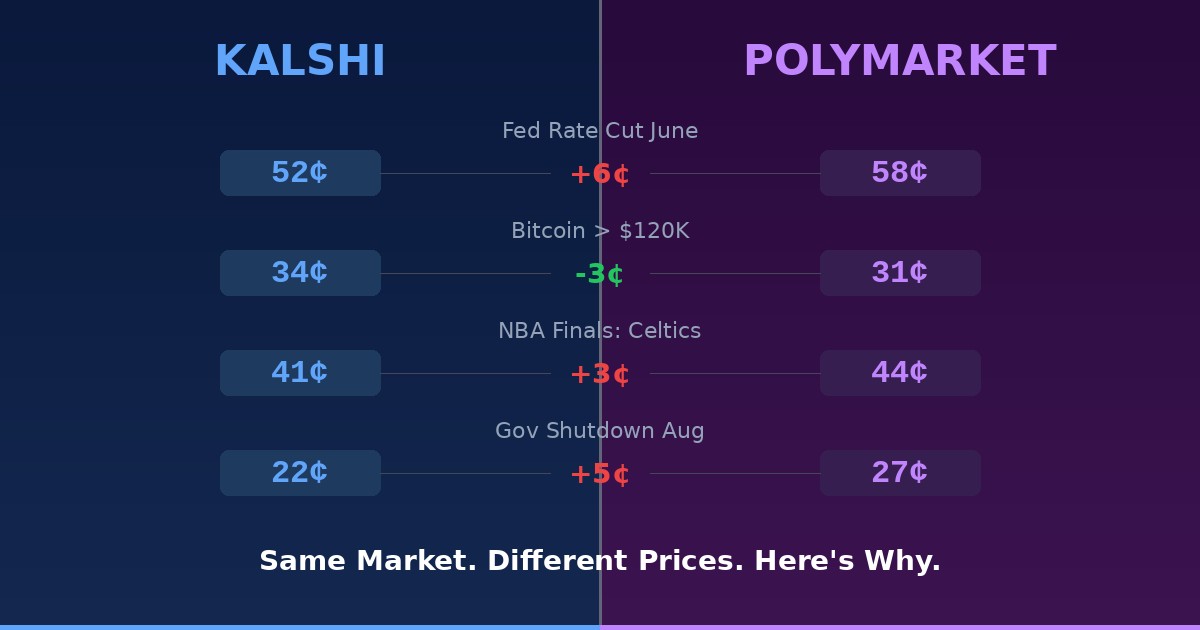
Why Kalshi and Polymarket Price the Same Market Differently
The same question can trade at 52¢ on one platform and 58¢ on another. It's not a glitch — it's liquidity, demographics, fees, and market structure.
7 min readRead
How to Build a Prediction Market Trading Bot (API Guide)
The APIs, SDKs, strategies, and hard-earned lessons behind building automated prediction market trading systems — from first API call to working bot.
11 min readRead