



Markey Leads Massachusetts Democratic Senate Primary at 76%
Sanders endorsement and 73% convention share give Markey a three-to-one delegate edge; Moulton's path hinges on age framing and turnout surprises.
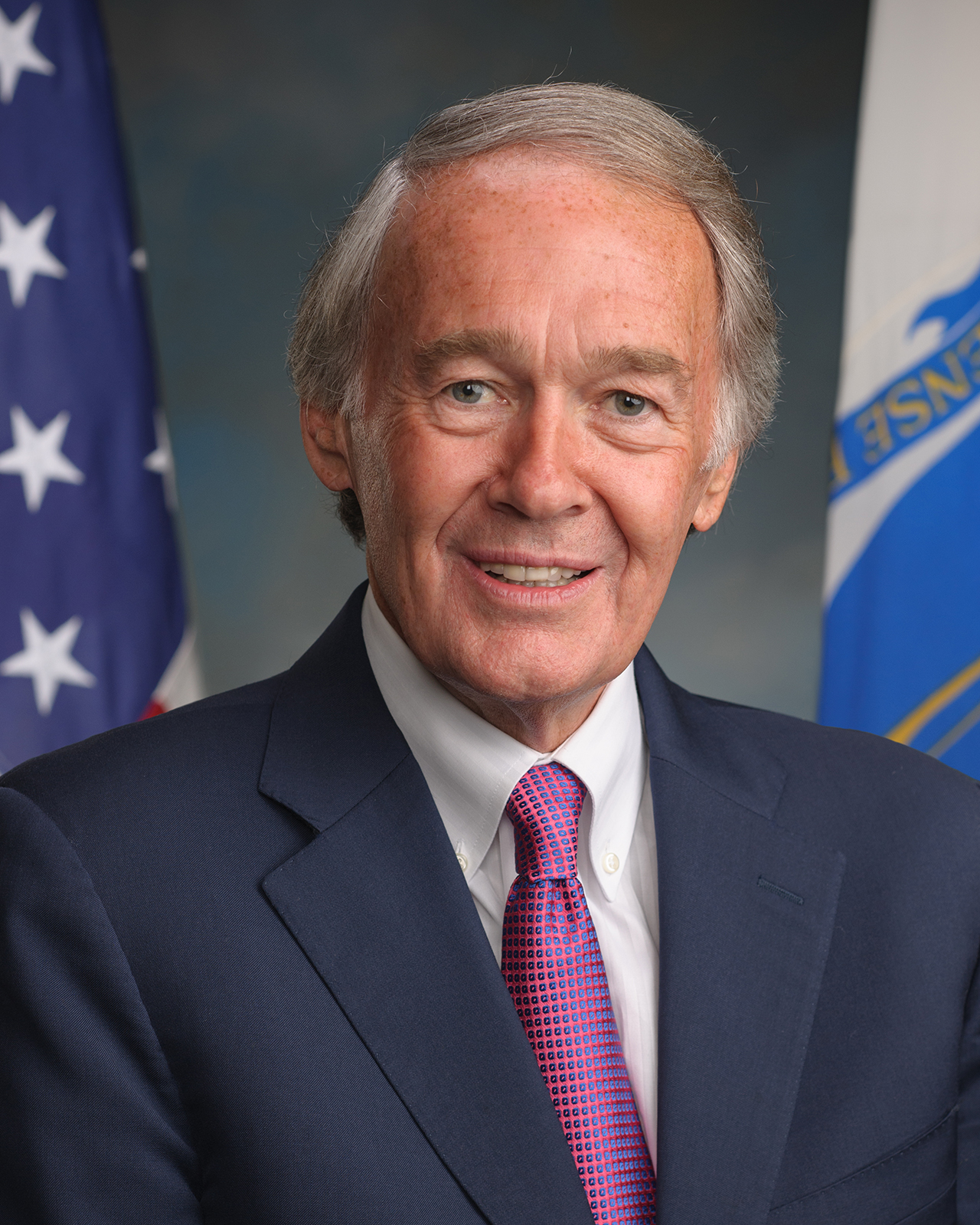
The Endorsement Stack That Should Have Closed This Market Already, So Why Is Ed Markey Still at 76%?
Ed Markey walked out of the Massachusetts Democratic Party convention on May 30 with 73% of the delegate vote. A month later, Bernie Sanders flew in with a full-throated endorsement, activating the same progressive grassroots machinery that reshaped Senate primaries in 2018 and 2020. By mid-July, Markey had consolidated the institutional pillars of Massachusetts Democratic politics: party insiders, national progressive validators, and the environmental and labor networks he has cultivated across decades in office.
Prediction markets now price Markey at 76% to win the Democratic Senate nomination, up from a period low of 67%, a 9-percentage-point gain. Kalshi sits at 72%; Predictit at 81%. The spread between platforms suggests directional agreement but slight disagreement on magnitude.
Prediction-market view
Resolved Sep 2, 2026Final prices, venue by venue
This market settled on September 2, 2026, so nothing below is tradeable. These are the last prices each venue published before settlement, not live quotes.
Alexander Rikleen
Final YES price across 1 venues
Ayanna Pressley
Final YES price across 1 venues
Current new-user offer · Kalshi
Get a $35 trading bonusCode PRED35
New users only. Eligibility restrictions and terms apply.
Here is the puzzle: Markey's 73% convention share is nearly identical to his 76% market probability. The market appears to be doing little more than echoing what institutional Democrats already decided in late May. That raises a question worth $0.24 on every contract. Is the remaining probability on Seth Moulton reflecting a genuine competitive lane, or is it structural noise that will compress toward zero as September 1 approaches?
How Ed Markey Built an Endorsement Firewall Most Massachusetts Incumbents Would Envy
Start with the convention. Massachusetts Democratic Party endorsements are not ceremonial. Winning 73% of delegates requires organizing across the state's congressional districts, locking down local party chairs, union locals, and municipal committee members months in advance. Moulton's 27% share tells you the moderate wing of the party showed up. It also tells you that wing is outnumbered nearly three-to-one among the people who actually run Democratic campaigns at the precinct level.
Then came Sanders. On June 29, the Vermont senator endorsed Markey, citing alignment on Medicare for All and the Green New Deal. Sanders' endorsement is not merely symbolic. It unlocks a donor list and small-dollar fundraising infrastructure that proved decisive in races from Pennsylvania to Wisconsin during the last two cycles. For Markey, who co-authored the Green New Deal resolution in 2019, the Sanders stamp reinforces an ideological brand that already had deep roots in Massachusetts' progressive electorate.
Layer on environmental organizations, climate advocacy groups, and labor affiliates whose endorsements track with the convention result, and Markey's structural position becomes clear. He doesn't just lead. He controls the field.
Moulton, by contrast, occupies a moderate lane with no equivalent institutional stack. No major labor endorsement. No national progressive validator. No convention majority. His path requires persuading voters who are not already embedded in the party apparatus, which is a harder task in a low-turnout September primary where organization matters more than attention.
The Steelman for Seth Moulton: What Would Have to Be True for the 24% to Pay Out
Intellectual honesty demands this section. Markey is 80 years old. Age dominated the first primary debate in Chicopee on July 8, where Moulton pressed the generational argument directly. If age becomes the dominant frame over the final five weeks, Moulton has a wedge that institutional endorsements cannot neutralize. Voters can agree with Markey's politics and still decide it is time for someone younger.
The second scenario is turnout composition. Massachusetts primaries in non-presidential years historically draw fewer than 20% of registered Democrats. If Moulton can activate irregular voters, particularly in suburban districts outside the Route 128 corridor where progressive infrastructure is thinner, he could outperform his convention share. The 27% delegate floor is not necessarily his ceiling among actual primary voters, who are a different electorate from convention delegates.
Third, there is the debate trajectory. Markey and Moulton clashed on experience and policy in their first forum. Additional debates could produce a moment that reshapes the race's narrative. A stumble, a health question that becomes visual rather than abstract, or a policy gaffe could shift voter attention in ways that endorsement lists cannot counter.
For the 24% to pay out, at least two of these three conditions probably need to converge: age becomes the ballot question, turnout breaks from historical patterns, and a debate moment gives Moulton earned media dominance. Any one alone is likely insufficient against Markey's institutional depth.
What the Market Is Pricing and What It Is Missing Before September 1
The 9-percentage-point move from 67% to 76% over three days suggests the market is absorbing accumulated information rather than reacting to a single catalyst. No clear event in the last 72 hours explains the spike. More likely, traders are repricing the cumulative weight of the convention result, the Sanders endorsement, and the debate's failure to produce a Moulton breakout.
The 9-percentage-point Kalshi-Predictit spread (72% vs. 81%) is worth monitoring. Predictit's higher price may reflect its smaller, more politically engaged user base pricing in institutional signals more aggressively. Kalshi's lower figure could indicate broader participation or slightly more skepticism about whether the primary is truly locked. Either way, both platforms agree on the direction.
Resolution arrives September 1. That leaves 39 days for Moulton to find a path that does not exist in the endorsement data, the convention count, or the current fundraising picture. Markey's structural position mirrors the market's implied probability almost exactly. The remaining 24% is the market's honest acknowledgment that primaries are not conventions, that five weeks is long enough for surprises, and that an 80-year-old incumbent always carries tail risk that no endorsement can fully hedge. Whether that 24% compresses further or holds will depend on whether Moulton can make age a voting issue rather than a debate talking point. So far, there is no evidence he can.
Join our Discord for breaking news alerts, driven by real-time movements in prediction markets.
The story so far: Massachusetts Democratic Senate nominee?
8 updates · Jul 2 – Aug 22
Free Trading Tools
View allCompare fees across Kalshi, Polymarket & PredictIt.
Find fair probabilities with the overround removed.
See if a trade has positive EV before you enter.
Convert American, decimal & implied probability.
Combined odds and payouts for multi-leg bets.
Your real take-home after fees and taxes.